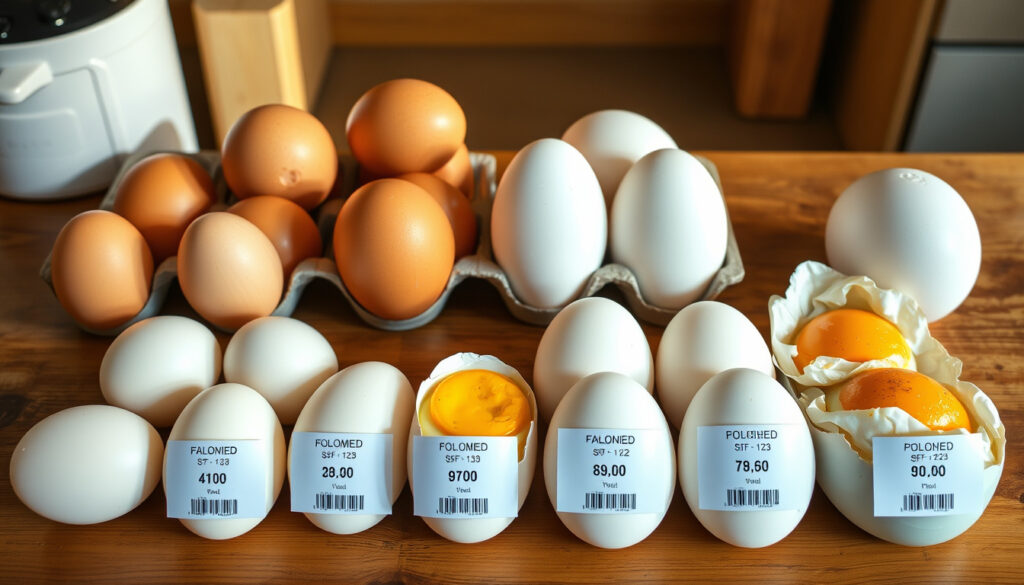
Calories in an Egg – Exact Counts by Size and Method
Eggs rank among the most versatile and widely consumed foods globally, yet precise calorie content varies based on size, preparation method, and whether you eat the white, yolk, or entire egg. Understanding these distinctions helps with meal planning, dietary tracking, and making informed nutritional choices. This breakdown provides USDA-referenced data to clarify exactly how many calories one egg contains across different sizes and cooking methods.
A single large egg contains approximately 72 calories when consumed raw and whole, delivering roughly 6.3 grams of protein alongside essential vitamins and minerals. The distribution between components proves significant: the white accounts for just 17 calories while the yolk contributes the remaining 55 calories. Preparation methods introduce additional variables, with boiled eggs maintaining close proximity to raw values while fried and scrambled preparations typically add 10-30 calories depending on cooking fat used.
How Many Calories Are in One Egg?
Eggs are standardized by the United States Department of Agriculture into four primary size categories, each carrying distinct caloric values based on edible portion weight. The small category (~38g) provides approximately 54 calories, medium eggs (~44g) offer around 66 calories, large eggs (~50g) deliver 72 calories, and extra-large varieties (~56g) reach approximately 90 calories. These figures represent raw, whole eggs and serve as the baseline for all nutritional comparisons.
Key Calorie Insights
- The yolk contains approximately 75% of the total calories in a whole egg despite representing only about one-third of the egg’s weight
- Egg whites are virtually fat-free at just 0.06 grams of fat per large white, making them ideal for low-calorie meal plans
- Boiling eggs adds minimal calories—approximately 6 extra calories compared to raw—since no cooking fat is absorbed
- Frying methods typically add 18-28 calories depending on whether butter or oil is used and how much the egg absorbs
- The 100g reference standard for raw whole eggs shows 131 calories, allowing easy calculation for any size variation
- Extra-large eggs can contain up to 25% more calories than large eggs, making size selection important for precise calorie tracking
Complete Size and Type Reference Table
| Egg Size/Type | Calories | White | Yolk | Notes |
|---|---|---|---|---|
| Small (raw) | 54 | 11 | 43 | ~38g edible portion |
| Medium (raw) | 66 | 14 | 52 | ~44g edible portion |
| Large (raw) | 72 | 17 | 55 | ~50g, USDA benchmark |
| Extra-Large (raw) | ~90 | ~21 | ~69 | ~56g edible portion |
| Large, Boiled | 78 | 17 | 61 | No added fat |
| Large, Fried | 90-100 | 17 | 55+ | Adds 1-2g cooking oil |
| Large, Scrambled | 80-110 | 17 | 55 | Varies by milk/oil added |
Calories in Egg White vs. Yolk
The caloric division between egg white and yolk reflects their fundamentally different compositions. The white consists primarily of protein dissolved in water, with minimal fat content and negligible cholesterol. A large egg white provides approximately 17 calories, 3.6 grams of protein, and trace amounts of riboflavin, making it a popular choice for those seeking high-protein, low-calorie nutrition without dietary cholesterol or saturated fat.
The yolk, conversely, concentrates the majority of the egg’s fat content, vitamins, and minerals. At approximately 55 calories per large yolk, this component contains 4.5 grams of fat including 1.6 grams of saturated fat, along with cholesterol (around 186mg per large yolk), vitamins A and D, choline, and selenium. Despite carrying most of the egg’s calories, the yolk also provides essential nutrients that the white lacks, creating a nutritional partnership between both components.
Eating the whole egg provides superior nutrition compared to whites-only consumption. Research indicates the protein in yolks becomes more bioavailable when consumed alongside whites, and the vitamin A, D, and choline content remains exclusively in the yolk portion.
Macronutrient Distribution in a Large Raw Egg
Breaking down the 72-calorie large egg further reveals a protein-to-fat ratio that supports various dietary approaches. Total fat amounts to 4.8 grams, with saturated fat at 1.6 grams, monounsaturated fat at 1.8 grams, and polyunsaturated fat at 1 gram. Carbohydrates remain minimal at 0.36 grams, essentially negligible for low-carbohydrate diets. The complete amino acid profile supports muscle repair and satiety, contributing to the egg’s reputation as a satiating food that promotes fullness for several hours after consumption.
Calories in a Boiled Egg and Other Cooking Methods
Cooking method significantly impacts the final calorie count of an egg dish. Boiling represents the closest preparation to raw nutritional values, with a hard-boiled large egg containing approximately 78 calories—only 6 more than the raw equivalent. This minimal increase stems from water absorption during cooking, which slightly raises the egg’s weight and therefore its caloric content. Both hard-boiled and soft-boiled eggs maintain the same fundamental nutritional profile as their raw counterparts.
Frying introduces the most substantial calorie additions among common preparation methods. A large fried egg typically ranges from 90 to 100 calories depending on the cooking fat used, the quantity absorbed during cooking, and whether the egg is prepared sunny-side-up, over-easy, or as a whole fried egg. Using butter versus vegetable oil, the cooking temperature, and the duration all influence how much fat the egg absorbs, creating this 10-30 calorie variance.
Independent testing and USDA data indicate that standard frying methods add approximately 1-2 grams of cooking fat per egg. Switching from butter to a light oil spray can reduce this addition by roughly 30-40%, bringing fried egg calories closer to 85-90 rather than the higher range.
Scrambled Egg Calorie Variations
Scrambled eggs present the widest calorie range of any preparation method, spanning from approximately 80 calories to over 110 calories per large egg serving. The variation depends almost entirely on added ingredients rather than the egg itself. Basic scrambled eggs made with one large egg and minimal milk or oil typically fall in the 80-90 calorie range. Adding cream, cheese, butter, or cooking in larger quantities of oil pushes values toward the higher end of the spectrum.
Liquid whole frozen eggs, standardized by the USDA, provide 35 calories per 25-gram serving with 3 grams of protein and 3 grams of fat each. This processed format offers consistent portion control for commercial and food service applications, though fresh eggs remain preferred for home preparation due to superior texture and flavor.
Are Eggs High in Calories for Dieting?
Eggs rank favorably among protein sources when considering calorie density. At 72 calories per large egg delivering 6.3 grams of protein, the protein-to-calorie ratio of approximately 1:11 compares advantageously with most meat, dairy, and plant-based protein options. This efficiency makes eggs particularly suitable for individuals managing caloric intake while seeking adequate protein for muscle preservation during weight loss efforts.
The satiety index of eggs ranks among the highest of common foods, meaning they promote sustained feelings of fullness that reduce overall daily caloric consumption. Studies cited in nutritional literature support the inclusion of 1-2 eggs per meal as part of calorie-controlled eating patterns. The high choline content supports metabolic function, while the complete amino acid profile helps maintain lean tissue during caloric restriction, preserving metabolic rate more effectively than protein-deficient diets.
Swapping a typical breakfast cereal (200-300 calories) for two eggs (144-156 calories) creates a calorie deficit of 50-150 calories without significant hunger increase. The protein content supports morning energy levels while the fat in the yolks provides sustained fuel for several hours.
Comparing Eggs to Other Protein Sources
Two eggs provide approximately 144 calories and 12.6 grams of protein, competing favorably with a 3-ounce chicken breast (about 140 calories, 26 grams protein) when considering total meal context. The egg preparation requires no additional protein to make a satisfying meal, whereas chicken often accompanies rice, vegetables, or other side dishes that substantially increase total caloric intake. For those prioritizing convenience and calorie control, eggs offer an efficient protein delivery system.
Egg whites specifically serve those seeking extremely low-calorie protein options, with each large white providing 17 calories and 3.6 grams of protein. Four egg whites (68 calories) approximate the protein content of one whole large egg while reducing fat intake by approximately 4.5 grams. This trade-off remains appropriate for athletes cutting weight or individuals with specific cholesterol management requirements under healthcare provider guidance.
Calorie Counts: Established Values vs. Variables
The USDA FoodData Central provides standardized reference values that serve as reliable benchmarks for egg calorie calculations. The large egg values of 72 calories for whole, 17 for white, and 55 for yolk represent the most consistently cited figures across nutritional databases and food packaging labels. These values apply to conventional eggs meeting USDA grade standards and should be considered accurate within typical variance ranges.
Exact calorie content varies based on hen diet, breed, and living conditions. Heritage breeds and eggs from pasture-raised hens may show slight nutritional differences from standard commercial eggs. Additionally, freshness affects weight—as eggs age, moisture loss slightly concentrates nutrients per gram while reducing total weight.
| Category | Established Data | Variable Factors |
|---|---|---|
| Large egg (raw, whole) | 72 calories | ±2-3 calories by farm |
| Boiled large egg | 78 calories | Minimal variation |
| Fried large egg | 90-100 calories | ±15 calories by method |
| Scrambled large egg | 80-110 calories | ±20 calories by additions |
Sources and Data Quality
Nutritional data presented here draws primarily from the USDA FoodData Central database, which maintains the most authoritative and regularly updated food composition tables in the United States. The American Egg Board and Iowa Egg Council provide additional industry-calibrated values that align with USDA standards. Research from Hendrix Genetics’ egg industry publications offers supplementary data on size-specific variations.
“The egg remains one of nature’s most complete and nutritious foods, providing high-quality protein alongside essential vitamins and minerals in a calorie-efficient package.”
— American Egg Board Nutrition Research Summary
The American Egg Commission provides preparation-specific nutritional data that accounts for cooking method variations, while USDA Child Nutrition Programs documentation offers standardized values for liquid and processed egg products used in food service applications.
Summary
Understanding egg calories requires recognizing the distinction between sizes, components, and preparation methods. A large raw egg provides 72 calories with 6.3 grams of protein, while the white alone offers 17 calories and the yolk contributes 55 calories along with most vitamins and minerals. Boiled eggs maintain values close to raw, while fried and scrambled preparations add 10-40 calories depending on cooking fat used. For those tracking caloric intake, eggs remain an efficient protein source that supports satiety and nutritional adequacy without excessive calories. For further measurement conversions, see our guide on How Many Grams in a Pound.
Frequently Asked Questions
How many calories are in 2 large eggs?
Two large eggs contain approximately 144 calories total when consumed raw and whole, providing about 12.6 grams of protein. Cooked preparations like boiling or frying add 6-40 additional calories depending on the method.
Are eggs high in calories compared to other protein foods?
Eggs fall in the moderate-to-low range for caloric density among protein sources. At 72 calories per large egg with 6.3 grams of protein, they provide efficient nutrition without the higher fat content of many meat options.
How many calories does a medium egg contain?
A medium egg provides approximately 66 calories when raw and whole, containing about 44 grams of edible portion. This represents roughly 6 fewer calories than a large egg.
What is the lowest calorie way to cook an egg?
Boiling produces the lowest calorie cooked egg at approximately 78 calories per large egg. Poaching similarly adds minimal calories since no cooking fat is used. Both methods preserve the egg’s original nutritional profile.
Can I eat eggs every day while dieting?
Current nutritional guidance supports daily egg consumption for most individuals when part of a balanced diet. The protein content supports weight management by promoting satiety, while the calorie density remains reasonable at under 100 calories per egg.
How do egg calories change with different cooking methods?
Raw eggs contain the baseline calories at 72 for large. Boiling adds approximately 6 calories, while frying typically adds 18-28 calories depending on cooking fat. Scrambled eggs show the widest range at 80-110 calories based on added milk, cheese, or butter.
More related posts
 Galaxy S23 Plus to Buy: Ireland Prices & Trade-In Value
 Fred Again: Biography, Nepo Baby Rumors & Rise to Fame
 Liz Earle: Marriages, Children, and Net Worth
 Kevin the Carrot 2025: Aldi Christmas Plush and Advert Guide
 How to Fix Sound Not Working on Windows PC or Laptop
 Seb Vettel: Why He Retired, Ferrari Exit, and Life After F1
 Birmingham Airport Arrivals Today – Live Status, Gates & Delays
 Rock Stars: Music Legends, TT Rock Stars, and Trapstar Explained