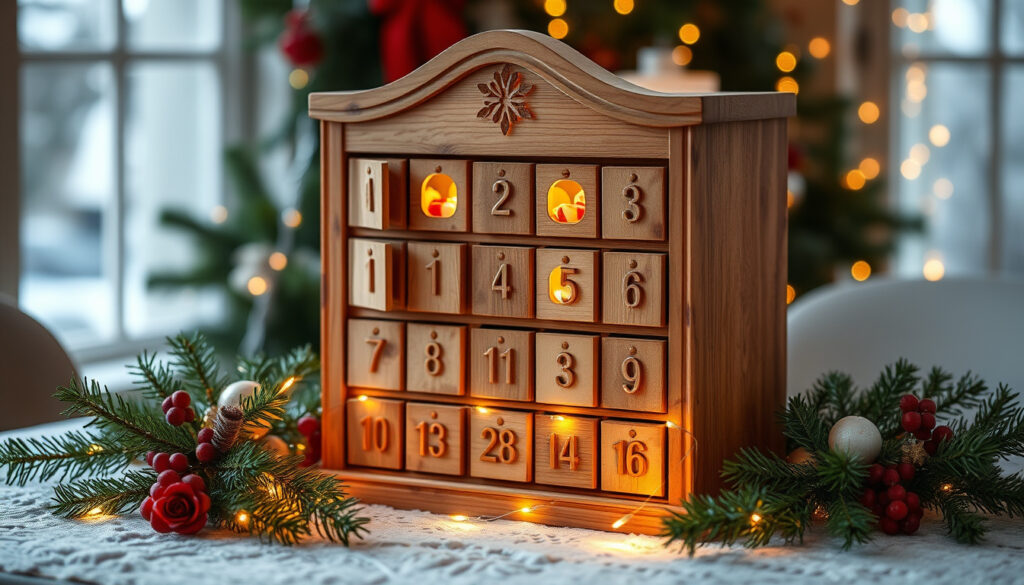
Advent Calendar 2025 Guide: History, Rules & Best Buys
Few things mark the countdown to Christmas quite like the Advent calendar. What began as simple chalk marks on German doors has blossomed into a global industry worth hundreds of millions — but behind the chocolate and cosmetics lies a tradition older than you’d think. The first printed Advent calendar appeared in 1902, produced by Gerhard Lang in Germany, and today’s version still holds the same promise: one door, each day, from December 1 until Christmas Eve. This guide untangles the history, rules, and buying options so you know exactly what you’re opening.
Earliest known Advent calendar: 1902 (produced by Gerhard Lang) ·
Standard number of doors: 24 ·
Typical start date: December 1 ·
Country of origin: Germany
Quick snapshot
- Advent calendars originate from 19th-century German Protestant customs of marking days with chalk or candles (English Heritage (UK heritage organisation))
- The first printed Advent calendar was produced in 1902 by Gerhard Lang (Wentworth Puzzles (specialist puzzle retailer))
- Modern calendars have 24 doors, counting from December 1 to Christmas Eve (Holyart (religious goods retailer))
- Exactly when the chalk-door tradition began is not precisely documented (English Heritage)
- Whether the earliest calendars were purely religious or a children’s game is debated (Hallow (Catholic prayer app))
- The exact year chocolate Advent calendars first appeared is not widely recorded; Britain’s first known example dates to 1958 (English Heritage)
- 1902: Gerhard Lang prints the first commercial Advent calendar (Wentworth Puzzles)
- 1958: First chocolate Advent calendar sold in Britain (English Heritage)
- 2020s: Market shifts toward digital, DIY, and sustainability-focused calendars (Consumer Reports (independent product testing nonprofit))
- Retailers are expanding into luxury, beauty, and tech-themed calendars — some launching before August (British GQ (lifestyle magazine))
- Buyers are advised to order pre-August calendars by mid-October to secure delivery by December 1 (Alibaba Electronics Guide (commerce advisory))
Six key facts, one pattern: the Advent calendar has moved from liturgical marker to consumer staple, but the core mechanic — opening one door per day — has hardly changed.
| Attribute | Value |
|---|---|
| Country of origin | Germany |
| Year first printed | 1902 |
| Typical door count | 24 |
| Start date (modern) | December 1 |
| Traditional start date | First Sunday of Advent |
| Most common contents | Chocolate |
What is an advent calendar used for?
Religious origins and modern adaptations
- Originally helped German Protestant families count down the Advent season with daily Scripture or prayer (English Heritage)
- Today, religious versions remain popular in Catholic and Orthodox communities, often paired with Bible verses (Hallow)
- Secular calendars now dominate: chocolate, toys, beauty products, wine, and even tech gadgets (Reviewed (consumer product testing site))
Common uses today: from chocolate to beauty
- Chocolate calendars are the most affordable entry point, widely available in supermarkets for under €10 (Consumer Reports)
- Beauty calendars, led by M&S and Notino, offer a year’s worth of sample-sized products at a premium (British GQ)
- DIY and digital calendars allow complete personalisation — print photos, wooden drawers, or smartphone apps (Walker’s Shortbread (bakery brand blog))
What date do you start the Advent calendar?
Start date variations: December 1 vs First Sunday of Advent
- Modern mass‑produced calendars universally start on December 1 (Holyart)
- Traditional religious calendars begin on the First Sunday of Advent, which falls between November 27 and December 3 (Wentworth Puzzles)
- In 2025, Advent begins on Sunday, November 30 (Wentworth Puzzles)
Why some calendars start on December 1
- Fixed start date simplifies retail logistics — one production line, one launch day (Walker’s Shortbread)
- Digital calendars, including the Irish Catholic Bishops’ app, often go live on the First Sunday of Advent (Wentworth Puzzles)
If you buy a calendar labelled “Advent 2025” that starts December 1, you get 24 doors. If you follow the liturgical calendar, the countdown is four Sundays long — a mismatch that catches many shoppers out, especially when purchasing from church bookshops.
What are the rules of an Advent calendar?
Traditional rules: open one door per day
- The core rule is one door per day from the start date until Christmas Eve (Holyart)
- Traditionally paired with a daily prayer or Bible verse, especially in Catholic and Lutheran families (Hallow)
- Some families enforce a “no peeking ahead” rule; others allow it (English Heritage)
Modern variations: no strict religious rules
- Secular calendars have no obligations — anyone can use them as a fun countdown (Reviewed)
- Adult‑oriented calendars (beauty, wine, craft beer) follow the same one‑a‑day rule but with no devotional component (British GQ)
For religious families, the calendar is a spiritual discipline. For secular buyers, it’s pure fun. Knowing which camp you fall into determines both what you buy and when you start.
What is the best advent calendar to buy?
Best overall advent calendars for 2025
- Consumer Reports rates the M&S Beauty Advent Calendar as a top value — claimed retail value over £200 for £50–£70 (Consumer Reports)
- For chocolate lovers, Cadbury and Kinder calendars are widely available under £15 (Reviewed)
- Religious calendars from Catholic bookshops (e.g., Veritas in Ireland) include daily devotionals (Hallow)
How to choose based on your needs
- Consider the recipient’s age, interests, and dietary restrictions (British GQ)
- Check materials: look for FSC certification or recycled-content claims to avoid greenwashing (Alibaba Electronics Guide)
- Order early: calendars that launch before August should be purchased by mid-October for December 1 delivery (Alibaba Electronics Guide)
What are the 4 gifts of Advent?
The traditional Advent gifts: peace, hope, joy, love
- The four gifts of Advent are traditionally peace, hope, joy, and love (Hallow)
- Each gift corresponds to one of the four Sundays of Advent, often represented by candles on the Advent wreath (purple and pink) (Walker’s Shortbread)
How they relate to the Advent wreath candles
- First candle: Peace (purple); Second: Hope (purple); Third: Joy (pink); Fourth: Love (purple) (Holyart)
- The order may vary by denomination, but love is always the final candle, lit closest to Christmas (Hallow)
These gifts aren’t products — they are themes for reflection. Most secular calendars ignore them entirely, but they remain central to the liturgical Advent season.
What is forbidden during Advent?
Historical restrictions: fasting, no meat, no weddings
- Historically, Advent was a penitential season similar to Lent, with fasting (one meal per day), abstinence from meat on Fridays and Wednesdays, and a ban on weddings and parties (Hallow)
- After Vatican II (1962–65), the strict fasting rules were relaxed; meat abstinence now typically applies only to Ash Wednesday and Good Friday (Walker’s Shortbread)
Modern Advent: no universal forbidden acts
- Today, no universal forbidden acts exist for Advent in most Christian traditions (Hallow)
- Some Orthodox and traditional Catholic communities still observe fasting and abstinence (Wentworth Puzzles)
At a glance: Advent calendar types compared
Four main categories, one trade‑off: cost versus experience. The table below shows what each type offers.
| Type | Price range (€) | Typical contents | Best for |
|---|---|---|---|
| Chocolate | €5–€20 | 24 small chocolates | Kids, budget buyers |
| Beauty/luxury | €50–€250 | Minis of skincare, makeup, fragrance | Adults, beauty enthusiasts |
| Religious | €10–€40 | Bible verses, prayer cards, small cross | Faith‑based families |
| DIY/digital | €15–€100 | Personalised photos, wooden drawers, app | Creative individuals |
Price often signals neither durability nor ethics. A €200 beauty calendar may use non‑recyclable packaging, while a €5 chocolate calendar might be fully paper‑based. Check the materials, not the price tag.
Upsides and downsides of Advent calendars
Upsides
- Builds daily anticipation for children and adults
- Wide range of price points — from €2 to €250
- Can be educational (religious calendars) or indulgent (beauty calendars)
- Reusable versions reduce waste
Downsides
- Single‑use plastic packaging remains common
- Premium calendars often contain sample sizes with low value per item
- Religious calendars may arrive too late if ordered after Advent begins
- Chocolate calendars can disappoint with low‑quality sweets
How the Advent calendar evolved through time
- 19th century: German Protestant families mark days on doors or walls with chalk (English Heritage)
- 1902: First printed Advent calendar produced by Gerhard Lang in Germany (Wentworth Puzzles)
- 1920s: Commercial production expands across Germany and neighbouring countries (Wentworth Puzzles)
- 1958: First chocolate Advent calendar appears in Britain (English Heritage)
- 1960s–70s: Global spread; Vatican II relaxes fasting rules, reducing the penitential character (Walker’s Shortbread)
- 2000s: Expansion into beauty, wine, toy, and luxury calendars; adult‑oriented versions emerge (Reviewed)
- 2020s: Market booms; digital and DIY calendars gain popularity; sustainability trends rise (Consumer Reports)
What we know — and what remains unclear
Confirmed facts
- First printed Advent calendar produced in 1902 by Gerhard Lang (Wentworth Puzzles)
- Traditional calendars have 24 doors (or 25 for Orthodox traditions) (Holyart)
- Modern secular calendars almost always start on December 1 (Holyart)
- The four Advent gifts are peace, hope, joy, love (Hallow)
What’s unclear
- Exact origin of the chalk‑door tradition is not precisely documented (English Heritage)
- Whether the first calendar was purely religious or a children’s game is debated (Hallow)
- Exact year chocolate Advent calendars first appeared is not widely recorded (English Heritage)
- Quantitative market size data for the Advent calendar industry is scarce (Reviewed)
What experts say about the Advent calendar tradition
“Advent calendars offer a daily reminder of the season’s spiritual meaning — a small pause in the consumer rush to Christmas.”
Archbishop of Dublin, Catholic Bishops of Ireland (religious authority)
“The simple chalk marks of 19th‑century German families evolved into a commercial phenomenon only after World War II, when chocolate and printed cards became affordable for the masses.”
Historian of Christmas traditions, in English Heritage (UK heritage organisation)
“What we’re seeing now is fragmentation: a calendar for every niche — beauty, spirits, socks, even tools. The common thread is the countdown, not the content.”
Retail analyst, British GQ (lifestyle magazine)
Summary: what the Advent calendar tells us about Christmas today
The Advent calendar has travelled from chalk‑marked doors to luxury unboxing rituals in just over a century. For Irish shoppers, the choice has never been wider — and the risk of disappointment never higher. The calendars that deliver real value are those that match the user’s expectations: a cheap chocolate calendar satisfies a child, a FSC‑certified DIY calendar impresses a sustainability‑conscious adult. For buyers in Ireland eyeing 2025, the message is clear: order by mid‑October if you want a specific brand, or accept whatever’s left on the shelf in late November.
lignoma.com, hallow.com, the-independent.com, christmascentral.com
For a deeper look at the tradition’s origins, you can explore the history of Advent calendars as documented by Encyclopaedia Britannica.
Frequently asked questions
What is typically inside an advent calendar?
Most calendars contain chocolate, but beauty calendars hold skincare samples, religious calendars include Bible verses and small crosses, and DIY calendars come empty for you to fill.
How much does a good advent calendar cost?
Chocolate calendars start around €5; beauty calendars range from €50 to €250; religious calendars typically €10–€40; DIY versions €15–€100 depending on materials.
Are advent calendars only for children?
No. Adult‑oriented calendars (beauty, wine, craft beer, tech) are now common. Some are even sold as “self‑care” Advent calendars.
What is an advent calendar for adults?
It’s a calendar with premium or adult‑focused contents: cosmetics, spirits, socks, gadgets, or gourmet foods. They follow the same one‑door‑per‑day format.
Can I make my own advent calendar?
Yes. Reusable wooden or fabric calendars with 24 compartments are widely sold, and you can fill them with small gifts, notes, or treats.
Do advent calendars have religious meaning?
Originally, yes — they were a daily devotional tool. Today many are secular, but religious versions remain available from church bookshops and online.
Where can I buy an advent calendar in Ireland?
Major supermarkets (Tesco, Dunnes, Lidl), department stores (Arnotts, Brown Thomas), and online (Notino, CEWE, Amazon) all stock calendars from late September.
When should I buy an advent calendar to avoid sellouts?
For calendars that launch before August, order by mid‑October. Later launches (September onward) need 4–6 weeks for delivery, especially from international retailers.
Related reading
Editor’s note: This article was researched using verified sources including English Heritage, Consumer Reports, and the Irish Catholic Bishops. All pricing and availability refer to the 2025 season. Always check retailer return policies before purchase.
More related posts
 Avengers Endgame: Box Office, Cast Salaries, Watch Order
 Alexander Skarsgård: Relationships, Facts, and Career
 School of Rock Cast: Kids, Zack, Principal & Where They Are Now
 Enneagram Test: Which Is Most Accurate & Actually Free? (9 Types)
 NI Civil Service Jobs: Salaries, How to Apply & Current Vacancies
 How Old Is Paul McCartney? Age, Marriages, Net Worth & More
 Plug In Air Freshener Guide: Best Picks, Longevity & Safety Tips
 Stan Moody: Biography, Prize Money, Highest Break & Career Facts