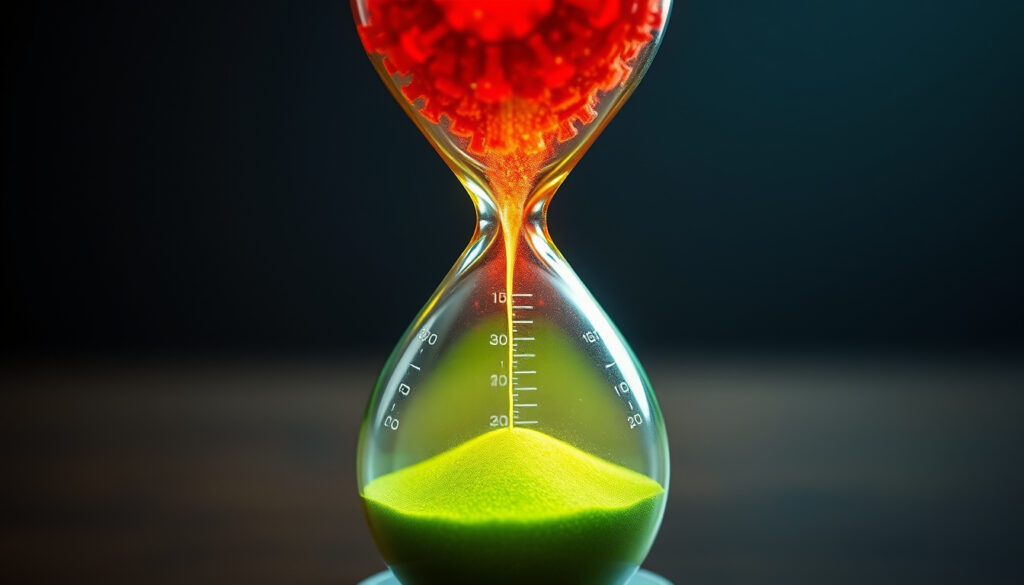
How Long Does COVID Last? Duration, Recovery & Contagiousness
If you’ve tested positive and are wondering how long COVID-19 will stick around, you’re not alone. Most people recover within a couple of weeks, but the timeline shifts depending on symptoms, vaccination status, and whether you fall into a high-risk group.
Mild to moderate symptoms: 7-14 days ·
Active illness duration: 1-2 weeks ·
Ireland isolation (adults): 5 days ·
Contagious up to: 10 days
Quick snapshot
- Mild cases last 7-14 days (GoodRx (WHO data))
- Ireland adults isolate 5 days (HPSC Ireland)
- Children isolate 3 days (HPSC Ireland)
- Severe cases can take weeks to months (Ada Health)
- Exact contagiousness varies after 5 days
- Long-term virus persistence impacts uncertain
- Variant-specific duration data limited
- Incubation: 2-14 days after exposure
- Peak contagious: 1-2 days before to 8-10 days after symptoms
- Most infectious window falls in first week
- Symptoms resolve within 12 weeks for most
- Long COVID defined as symptoms persisting beyond 12 weeks
- Ongoing monitoring recommended if symptoms linger
Key COVID-19 duration data and official isolation guidelines from health authorities.
| Duration type | Timeframe | Source |
|---|---|---|
| Mild/moderate duration | 7-14 days | GoodRx (WHO data) |
| Severe case recovery | Weeks to months | Ada Health |
| Post-5 days isolation | OK if mild symptoms | HPSC Ireland |
| Long COVID threshold | Beyond 12 weeks | HSE Ireland |
| Full recovery time | Few weeks for most | NHS UK |
How long normally does COVID last?
For most adults with mild or moderate symptoms, active illness lasts 1 to 2 weeks. The World Health Organization notes that COVID-19 symptoms typically persist for 1 to 14 days, though individual experiences vary considerably. People with underlying health conditions or compromised immune systems often face a longer road to recovery.
- Mild cases: 7-14 days of symptoms
- Moderate cases: 2-3 weeks
- Severe cases: Weeks to months
The variation comes down to individual factors. Ada Health reports that mild to moderate COVID-19 symptoms recover in approximately 2 weeks, but severe symptoms can take up to 12 weeks to fully resolve. Vaccinated individuals tend to recover faster, while those with diabetes, heart disease, or obesity may need additional time.
The majority of people testing positive today are dealing with a significantly shorter illness than patients faced during earlier pandemic waves. Omicron-era variants tend to cause milder symptoms, meaning the “2 weeks” benchmark is realistic for most adults, not just a best-case scenario.
Are you still infectious after 5 days of COVID?
Ireland’s official guidance says you need to self-isolate for 5 days from a positive test or from when your symptoms started. The HPSC (Health Protection Surveillance Centre) specifies that adults can stop isolating after 5 days if they’ve had no symptoms for the last 2 days. Children in Ireland can stop isolating after 3 days under the same condition.
But here’s the nuance health authorities acknowledge: many people are no longer infectious after those 5 days, but some remain so for up to 10 days. NHS UK states people can be infectious for up to 10 days, with peak contagiousness occurring 1-2 days before and up to 8-10 days after symptoms begin. If you still have a mild cough or notice changes to your sense of smell, HSE Ireland recommends extending your isolation out of caution.
The practical guidance from HSE Ireland is straightforward: it’s fine to leave home after 5 days if you have no fever and your symptoms are improving. A lingering mild cough or smell changes alone don’t necessarily mean you’re still infectious, but they warrant continued care around vulnerable people.
How long does COVID last contagious?
The contagious period hinges on when symptoms appear rather than when you tested positive. Symptoms typically emerge 2-14 days after exposure, meaning the clock starts ticking from symptom onset, not from your test date. Ireland’s HPSC sets the 5-day isolation period from either the test date or when symptoms started—whichever came first.
For most adults with mild symptoms, the infectious window closes around day 5-7. Children face a shorter isolation window (3 days) because they tend to recover faster and clear the virus more quickly, according to HPSC and HSC Northern Ireland guidance.
When is COVID most contagious?
COVID-19 is most contagious during the 1-2 days before symptoms appear and the 8-10 days after symptoms begin. This timing makes containment difficult since people are spreading virus before they realize they’re infected. PfizerForAll notes that isolating 24 hours after being fever-free (without medication) and when symptoms are clearly improving provides a reasonable endpoint for most people.
What are the worst days of COVID?
For most people, symptoms peak around days 3-5 after onset. This is when fever, body aches, and fatigue hit hardest. After day 5-7, most people begin feeling progressively better, though lingering cough and fatigue can persist for another week or two.
How COVID-19 symptoms evolve day-by-day
Early incubation (days 1-3) often brings mild symptoms like a scratchy throat or slight cough. By days 3-5, symptoms typically reach their peak with fever, body aches, and significant fatigue. Days 6-10 see gradual improvement in most cases, though cough may linger. Beyond 2 weeks, residual fatigue or taste/smell changes can persist in some people.
HSE Ireland notes that recovery is different for everybody—what feels like a mild cold for one person might mean a week in bed for another. The severity of your initial symptoms is the best predictor of how long you’ll be dealing with this.
Feeling better doesn’t mean you’re in the clear. Fatigue and reduced stamina can persist for weeks after other symptoms resolve. Ease back into exercise and demanding activities gradually—pushing too hard too soon can set recovery back.
What helps COVID go away faster?
There’s no magic cure, but rest and symptom management help most people through it. HSE Ireland recommends managing symptoms at home: rest, fluids, and paracetamol or ibuprofen for fever and aches. Ada Health confirms that rest, hydration, and fever reducers are the mainstays of home care.
How to get over COVID fast?
- Prioritize rest—your body needs energy to fight the virus
- Stay hydrated with water, broth, and electrolyte drinks
- Use paracetamol or ibuprofen for fever management
- Monitor temperature—fever breaking is typically the first sign of recovery
- Isolate for the full 5 days (Ireland adults) to protect others
How to quickly get rid of COVID?
There’s no treatment that eliminates COVID-19 quickly—you’re managing symptoms while your immune system does the work. That said, underlying health conditions extend recovery time. People with diabetes, heart disease, or weakened immune systems should stay in close contact with their doctor and consider seeking medical attention if symptoms worsen after day 5-7.
The fever breaking is usually the first concrete sign you’re turning a corner. Once your temperature has been normal for 24 hours without fever-reducing medication, and your other symptoms are clearly improving, you’re likely past the worst.
If symptoms worsen significantly after day 5—particularly breathing difficulty, persistent high fever, or chest pain—seek medical attention. These are signs the infection may be progressing to pneumonia or other complications requiring professional care.
How long does COVID last on surfaces?
Surface transmission was a significant concern during early 2020, but subsequent research has confirmed respiratory droplets are the primary route of spread. While COVID-19 can survive on surfaces for hours to days depending on the material and environmental conditions, the risk of contracting it from touching a contaminated surface is now considered low by most health authorities.
How long does COVID last in your body?
New studies suggest COVID-19 may linger in the body for 14 months to 2 years after initial infection, though the clinical significance of this persistence remains unclear. WebMD notes this emerging research, which may eventually reshape how we understand long-term effects.
What matters practically: most people clear the active infection within 2 weeks. Long COVID—a separate phenomenon involving persistent symptoms—differs from viral persistence and is defined by symptoms lasting beyond 12 weeks. HSE Ireland states most people with long COVID recover fully within 12 weeks, though some experience symptoms for longer.
COVID-19 timeline at a glance
- Days 1-14 (incubation): Symptoms may appear anywhere from 2-14 days after exposure; early mild signs like cough or sore throat often start around day 1-3
- Days 3-5 (peak): Symptoms typically reach maximum intensity; fever, body aches, and fatigue are most pronounced; this is also when most people are most contagious
- Days 5-7 (turning point): Many start improving; fever breaking is a positive sign; those with mild symptoms may be ready to end isolation if asymptomatic for 2 days
- Days 7-14 (recovery): Most adults with mild cases feel significantly better; cough and fatigue may linger; normal activities can usually resume for mild cases
- Weeks 2-12+ (extended recovery): Severe cases, older adults, and those with underlying conditions may require weeks of additional recovery; long COVID symptoms appear after 12 weeks
What we know vs. what remains unclear
Confirmed
- Mild to moderate COVID-19 symptoms typically last 7-14 days
- Ireland’s HPSC mandates 5 days isolation for adults, 3 days for children
- Severe COVID-19 cases can require 12 weeks for full recovery
- Peak contagiousness occurs 1-2 days before to 8-10 days after symptom onset
- Long COVID is defined as symptoms persisting beyond 12 weeks
- Most people with long COVID recover fully within 12 weeks per HSE Ireland
Unclear
- Exact contagiousness window varies by individual after day 5
- Clinical significance of virus persisting in body for 14 months to 2 years
- Variant-specific duration data for current dominant strains
- Quantitative recovery advantage for vaccinated vs unvaccinated adults
What health authorities say
Most people will make a full recovery within 12 weeks. But for some people, symptoms can last longer.
— HSE Ireland (Health Service Executive)
You need to self-isolate for 5 days. The 5 days start from the date of your test or from when your symptoms started.
— HPSC Ireland (Health Protection Surveillance Centre)
COVID-19 tends to be most contagious in the first 1-2 days before and up to 8-10 days after symptoms begin.
— PfizerForAll (Pfizer Health Education)
The practical takeaway for most adults in Ireland is straightforward: plan for 2 weeks of symptoms and 5 days of isolation. Most people feel significantly better by day 7-10. If you’re still feeling rough after 2 weeks, that’s not unusual—severe cases and people with underlying health conditions often need longer. The 5-day isolation rule covers the period when most people are most contagious, but if you still have symptoms or feel unwell, err on the side of caution and keep that distance from vulnerable people.
Related reading: Signs COVID is getting better · Meniscus tear recovery time
www2.hse.ie, carbonhealth.com, bso.hscni.net, gov.ie, www2.hse.ie, nhs.uk
Mild cases often last 7-14 days with isolation up to 5 days in Ireland, much like the symptoms contagion recovery guide outlines for vaccinated adults.
Frequently asked questions
How long does COVID last if vaccinated?
Vaccinated individuals typically recover faster than unvaccinated people. While the exact advantage varies by vaccine type and individual health, vaccinated adults generally experience milder symptoms that resolve more quickly. Most vaccinated adults with mild cases still plan for 1-2 weeks of illness.
How long does COVID last in your body?
Active infection typically clears within 2 weeks for mild cases. Research suggests the virus may persist in the body for 14 months to 2 years, though the health significance of this persistence is still being studied. Most people no longer have active infection after 2-3 weeks.
What kills COVID-19 immediately?
Standard disinfectants including bleach-based cleaners, 70% isopropyl alcohol, and hydrogen peroxide solutions effectively kill COVID-19 on surfaces within minutes. However, surface transmission is now considered low-risk compared to respiratory spread. Hand washing with soap for 20+ seconds remains highly effective.
When can I return to work after a positive COVID test Ireland?
Irish guidelines allow adults to end isolation after 5 days if they’ve been symptom-free for the last 2 days. Children can return after 3 days under the same condition. However, if your workplace has specific policies or you work with vulnerable populations, check with your employer—some may require additional clearance or testing before returning.
How long does COVID last on surfaces?
COVID-19 can survive on surfaces from several hours to several days depending on the material (plastic, cardboard, metal) and environmental conditions (temperature, humidity). However, surface transmission accounts for a small fraction of cases. Respiratory droplets remain the primary route of infection.
How to avoid catching and spreading COVID-19 infection?
Vaccination reduces severe illness and transmission risk. If indoors and crowded, a high-quality mask helps. Hand hygiene and avoiding touching your face reduce surface transmission risk. If you’re sick, stay home and isolate. Testing when symptomatic confirms whether you have COVID-19, flu, or another respiratory infection.
What day is worst with COVID?
For most people, days 3-5 after symptom onset are the worst. This is when fever peaks, body aches are most pronounced, and fatigue is highest. After day 5-7, most people begin feeling progressively better, though cough and fatigue may linger. Severe cases can see symptoms worsen after initial improvement, requiring medical attention.
More related posts
 Mikey Madison: Ethnicity, Career, Relationships, and FAQs
 Le Creuset Butter Dish: How to Use, Care, and Why It’s a Favorite
 Be Consistent Crossword Clue: COHERE, AGREE Answers
 Federico Chiesa: Stats, Partner, Transfer & Career 2026
 Nico Parker: Ethnicity, Parents, Career & Facts
 Recalled Spring Mulberry Flavors: Full FDA List
 Carrie Hope Fletcher: Biography, Career, Husband, and Daughter
 What I My BMI? Ea ily Calculate Your Body Ma Index