Duke of Kent: Relationship to Queen, Inheritance & Funeral
Royal titles in Britain often pass from father to son, but they rarely tell the full story of the person carrying them. Prince Edward, the Duke of Kent, has held his title since the age of six, when his father died in a plane crash — making him a first cousin to Queen Elizabeth II, and his 64‑year marriage to Katharine came to a close in September 2025, drawing a spotlight to a royal branch that has largely operated with quiet dignity rather than daily headlines.
Age: 89 years old · Years holding the title: 83 years · Children: 3 · Spouse: Katharine, Duchess of Kent (died September 2025)
Quick snapshot
- First cousin of Queen Elizabeth II (The Royal Family website)
- Inherited dukedom in 1942 (The Royal Family website)
- Attended his wife’s funeral in September 2025 (Sky News)
- Has three children (People)
- Still alive as of 2025 and continues royal engagements (The Royal Family website)
- Exact nature and cause of the Duchess of Kent’s long-term illness
- Specific medical diagnosis for the Duke of Kent’s ear condition
- Whether the Duke’s hearing loss is age-related or due to a specific medical condition
- Precise net worth figure
- Whether the Duke of Kent will retire from public duties after his bereavement
- Title will pass to eldest son, George Windsor, Earl of St Andrews (The Royal Family website)
- Duke of Kent continues public duties at age 89 (The Royal Family website)
- Line of succession remains intact under male-preference primogeniture (The Royal Family website)
Eight facts that define the Duke of Kent’s public and private profile, drawn from official monarchy records.
| Label | Value |
|---|---|
| Full Name | Prince Edward George Nicholas Paul Patrick |
| Title | Duke of Kent |
| Birth Date | October 9, 1935 |
| Inherited Title | 1942 (age 6) |
| Spouse | Katharine Worsley (1961–2025) |
| Children | George, Helen, Nicholas |
| Military Service | Retired as Colonel in 1976 |
| Current Residence | Kensington Palace |
How is Duke of Kent related to the Queen?
Prince Edward, Duke of Kent, is a first cousin of Queen Elizabeth II. His father, Prince George, Duke of Kent, was the fourth son of King George V, making George and Elizabeth II direct descendants of the same monarch from different branches of the family tree.
His mother was Princess Marina of Greece and Denmark, which gave the Kent children a distinctly cosmopolitan upbringing compared to their Windsor cousins. The Duke of Kent and the late Queen shared grandparents in King George V and Queen Mary, placing them in the same generational cohort of the royal family.
The Duke of Kent is also the older brother of Prince Michael of Kent and Princess Alexandra, making his siblings some of the most recognized “minor royals” who still attend major state occasions.
Being a “first cousin” to a monarch sounds close, but the Duke of Kent’s line has operated firmly in the constitutional wings for decades. Of all the adult royals alive today, the Duke of Kent holds the record for longest tenure carrying a significant royal title — 83 years and counting.
Who will inherit the Duke of Kent title?
The Duke of Kent’s title passes down the male line. The current heir is his eldest son, George Windsor, Earl of St Andrews. Under the rules of primogeniture governing the 1866 creation of this dukedom, the title can only be inherited by a legitimate male descendant.
- George Windsor, Earl of St Andrews (born 1962) is first in line (The Royal Family website)
- If George predeceases his father, the title moves to his son, Edward Windsor, Lord Downpatrick
- The title cannot be inherited by any of the Duke’s three children equally — only the male line matters
The implication: Unless George or his son produce a male heir, the title could technically face extinction, a common fate for older royal dukedoms that were created for younger sons of monarchs.
Why is Prince Michael of Kent a prince and not a duke?
- Prince Michael of Kent is the younger brother of the Duke of Kent (The Royal Family website)
- When their father died in 1942, the title of Duke of Kent passed entirely to Prince Edward, then aged six
- Prince Michael was born a prince and remains a prince, but he does not hold a dukedom because it was not separately created for him
- This distinction often confuses the public, as both brothers appear at royal events, but only one carries the ducal title
Prince Michael of Kent is a prince by birth, but the “Duke of Kent” title is an indivisible property that passed to the elder brother. The younger brother gets the rank but not the territorial designation — a nuance that creates a subtle but real hierarchy within the family.
Thus, the future of the dukedom hinges on the birth of a male heir in the next generation.
Did the Duke of Kent go to his wife’s funeral?
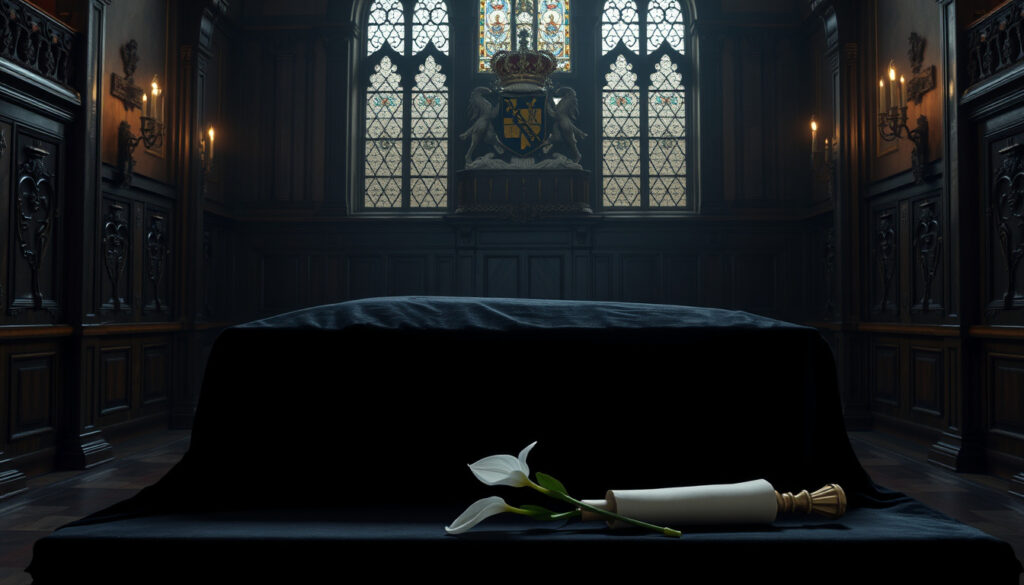
Yes, the Duke of Kent attended the funeral of his wife Katharine, Duchess of Kent, on September 16, 2025, at Westminster Cathedral in London. Witnesses described him as visibly emotional as he bid farewell to his partner of 64 years.
The funeral was a Catholic requiem mass, described as the first royal Catholic funeral in modern British history. The King, Prince William, and the Princess of Wales attended the service. Queen Camilla withdrew due to acute sinusitis, Buckingham Palace announced.
- Funeral held at Westminster Cathedral, the seat of the Archbishop of Westminster (Sky News)
- First royal funeral at that location since its construction in 1903 (People)
- Queen Camilla sent her “deep regrets” over missing the service (BBC News)
- The Duke of Kent was interred alongside his wife at the Royal Burial Ground, Frogmore, after the service
What did Prince Andrew do at the Duchess of Kent’s funeral?
Prince Andrew also attended the funeral, marking a rare public appearance for the Duke of York. Since stepping back from royal duties in 2019, Andrew has largely remained out of the public eye. His attendance at the funeral was noted by royal watchers as one of his first public outings at a major royal family event in several years.
The trade-off: A family funeral brings together branches of the royal tree that rarely intersect in public anymore. Andrew’s presence underscored the personal nature of the occasion, setting aside protocol for family grief.
What illness did the Duchess of Kent have?
Katharine, Duchess of Kent, suffered from a series of health challenges in her later years. She experienced a stroke in 2018, which significantly limited her public appearances. She also withdrew from virtually all royal engagements after 2022, choosing to live quietly at Kensington Palace with her husband.
The Duchess did not attend Queen Elizabeth II’s funeral in September 2022, nor did she attend King Charles III’s coronation in May 2023, signaling the seriousness of her health decline.
- Suffered a stroke in 2018
- Final public appearance was on October 9, 2024, for the Duke of Kent’s 89th birthday
- Had a long battle with unspecified illness
- Her husband reportedly cared for her at home with assistance from medical staff
What ear condition does the Duke of Kent have?
The Duke of Kent uses a hearing aid and has a visible ear condition that is frequently noticed by photographers at public engagements. The specific nature of his hearing loss — whether it is age-related or the result of a specific medical condition — is not publicly documented.
- Commonly seen wearing a hearing aid at public events
- Has not publicly disclosed a specific diagnosis
- Reportedly age-related hearing loss that does not significantly impede his duties
The pattern: Health struggles have quietly shaped the later years of the Kent branch. While the Duke is still active, the couple’s final years were largely private, away from the cameras that track the more senior working royals.
Is the Duke of Kent still alive?
Yes, as of 2025, the Duke of Kent is alive at age 89. He continues to carry out royal engagements, making him the longest-serving working member of the extended royal family. He lives at Kensington Palace and maintains an office that coordinates his public appearances and charitable patronages.
Who are the Duke of Kent’s children?
- George Windsor, Earl of St Andrews (born 1962) — Heir to the dukedom. Works in publishing and has three children.
- Lady Helen Taylor (born 1964) — A working royal who lives in London with her husband and children.
- Lord Nicholas Windsor (born 1970) — The youngest child, who converted to Catholicism. He lives a private life.
What is the Duke of Kent’s net worth?
The precise net worth of the Duke of Kent is not publicly disclosed. As a senior working royal, he receives a small parliamentary annuity for official duties, but he also has personal assets inherited from his father and from the estate of his mother, Princess Marina. Estimates vary significantly, and no official accounts are published for his personal wealth.
Timeline: Duke of Kent’s life
The following timeline traces key milestones in the Duke of Kent’s life.
| Date | Event |
|---|---|
| October 9, 1935 | Birth of Prince Edward at Belgrave Square, London |
| 1942 | Inherited title of Duke of Kent after his father’s death in a plane crash |
| 1961 | Married Katharine Worsley at York Minster |
| 1976 | Retired from active military service; became full-time working royal |
| 2018 | Duchess of Kent suffered a stroke |
| September 4, 2025 | Death of Katharine, Duchess of Kent (The Royal Family website) |
| September 16, 2025 | Funeral of the Duchess of Kent at Westminster Cathedral |
Clarity check: What we know and what we don’t
Confirmed facts
- Prince Edward, Duke of Kent, is a first cousin of Queen Elizabeth II (The Royal Family website)
- He inherited the dukedom in 1942 after his father’s death (The Royal Family website)
- He attended his wife’s funeral in September 2025 (Sky News)
- He has three children: George, Helen, and Nicholas (People)
- He is still alive as of 2025 and continues to carry out royal engagements (The Royal Family website)
What’s unclear or unconfirmed
- Exact nature and cause of the Duchess of Kent’s long-term illness (not publicly specified)
- Specific medical diagnosis for the Duke of Kent’s ear condition (reported as general age-related hearing loss)
- Precise net worth figure (no official disclosure)
- Whether the Duke of Kent will retire from public duties after his bereavement
This breakdown distinguishes between confirmed facts and areas of uncertainty for readers.
Quotes and perspectives
“The Duke of Kent has quietly fulfilled thousands of royal engagements over seven decades, often serving as a bridge between the older generation of royals and the new.”
— Town & Country Magazine, in a profile of the Duke’s role within the family
“It was a historic moment — the first royal Catholic funeral at Westminster Cathedral since its construction.”
— Sky News, reporting on the Duchess of Kent’s funeral service
Summary
The Duke of Kent’s life spans the entire post-war history of the House of Windsor, from his childhood under George VI to the present day under Charles III. His 64-year marriage to Katharine ended with a historic funeral that brought together the entire royal family. For the House of Windsor, the passing of the Duchess of Kent marks the end of an era for the family’s oldest living generation. For the Duke himself, the choice is clear: continue the quiet duty he has upheld for 83 years, with his heir waiting in the wings.
bbc.com, en.wikipedia.org, britroyals.com, reddit.com, youtube.com, facebook.com, royal.uk, facebook.com
For a deeper look at his life and service, read the full biography of Prince Edward, Duke of Kent.
Frequently asked questions
How many children does the Duke of Kent have?
The Duke of Kent has three children: George Windsor, Earl of St Andrews; Lady Helen Taylor; and Lord Nicholas Windsor.
What was the Duchess of Kent’s name before marriage?
The Duchess of Kent was born Katharine Worsley. She married Prince Edward, Duke of Kent, in 1961.
When did the Duke of Kent inherit his title?
He inherited the title of Duke of Kent in 1942 at the age of six, after his father, Prince George, Duke of Kent, died in a plane crash.
Where does the Duke of Kent live?
The Duke of Kent resides at Kensington Palace in London, where he has lived for most of his married life.
Is the Duke of Kent still a working royal?
Yes, as of 2025, he continues to carry out public engagements and attend royal events, though his schedule has reduced due to his age.
What military rank did the Duke of Kent hold?
The Duke of Kent served in the British Army and retired as a Colonel in 1976, having served in the Royal Scots Greys.
Why is the Duke of Kent called Prince Edward?
He is called Prince Edward because he is a grandson of a monarch (King George V), which entitles him to the style of “Prince” and the title “Royal Highness.”
More related posts
 Rage Room Near Me – Charlotte Locations Prices Safety Guide
 Liz Earle: Marriages, Children, and Net Worth
 Keira Walsh: Partner, Height, Injury, Chelsea Move & Career Stats
 Interstellar Comet 3I/ATLAS: Strange Water & Where It Is Now
 Nico Parker: Ethnicity, Parents, Career & Facts
 Sponsorship Jobs in the UK: Skilled Worker Visa Guide
 Ron Weasley: Biography, Family, Actor and Character Analysis
 Fred Again: Biography, Nepo Baby Rumors & Rise to Fame