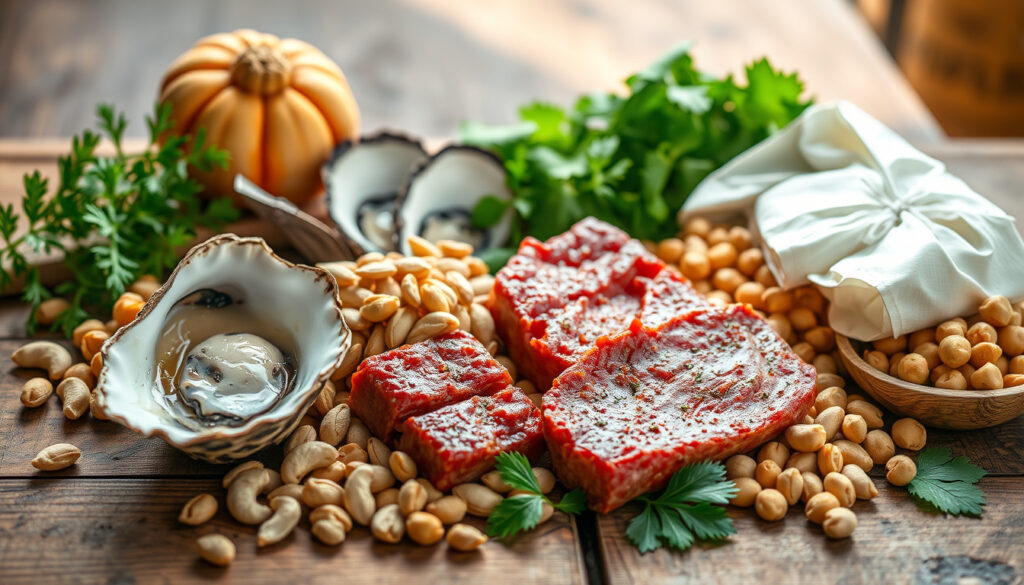
Foods High in Zinc: Top 10 Sources Ranked by Density
Low zinc quietly undermines your immune system, slows wound healing, and dulls your senses of taste and smell. The good news: you don’t need exotic supplements to fix it. Common foods you probably already eat — from beef to pumpkin seeds — can bump your levels up effectively. Here’s what to put on your plate, backed by government health data.
Daily zinc need for men: 11 mg · Daily zinc need for women: 8 mg · Oysters per 100g: up to 74 mg · Beef per 100g: 4–7 mg · Top vegetarian source: pumpkin seeds
Quick snapshot
- Oysters contain the most zinc of any food — up to 74 mg per 85 g serving (USDA National Agricultural Library)
- NIH recommends 11 mg/day for men, 8 mg/day for women (NIH dietary guidelines)
- Exact zinc absorption rates from plant sources vary by individual and food preparation method
- Regional zinc content in oysters differs by source (East Coast: 32 mg vs Pacific Coast: 28 mg per 3 oz)
- 1998: USDA ARS confirms vegetarians can meet zinc needs from food alone (USDA Agricultural Research Service)
- 2023: PMC study finds zinc intake still significantly lower in vegetarians vs omnivores (PMC nutritional research)
- Combining plant sources with vitamin C and protein improves absorption
- Soaking, sprouting, and fermenting reduce phytate barriers in plant foods
| Food | Zinc per serving | Serving size |
|---|---|---|
| Oysters (eastern, cooked) | 74.06 mg | 85 g (3 oz) |
| Beef (ground) | 4–7 mg | 100 g |
| Toasted wheat germ | 17 mg | 100 g |
| Hemp seeds | 10 mg | 100 g |
| Pumpkin seeds | 2.2 mg | 28 g (1 oz) |
| Tempeh | 3.24 mg | 100 g |
| Firm tofu | 2 mg | 100 g |
What food is highest in zinc?
Oysters blow every other food out of the water. According to the USDA National Agricultural Library, eastern cooked oysters pack 74.06 mg of zinc per 85 g serving. Canned eastern oysters are even higher at 77.31 mg for the same portion (USDA Office of Dietary Supplements). Seafood in general dominates the zinc rankings, with GoodRx health experts confirming that oysters contain the most zinc of any food.
Oysters and shellfish
If you’re not eating oysters regularly, you’re missing the most efficient zinc delivery system nature offers. Beyond fresh oysters, crab and lobster also contribute meaningful amounts. East Coast oysters run about 32 mg per 3 oz, while Pacific Coast varieties come in slightly lower at 28 mg per 3 oz.
Red meat and poultry
Beef and lamb provide substantial zinc — typically 4–7 mg per 100 g depending on the cut. Chicken and turkey dark meat also add to your daily intake. The USDA nutrient database lists these animal proteins as reliable sources that support immune function and muscle repair.
Dairy and eggs
Milk, cheese, and yogurt supply moderate zinc amounts. A large egg delivers roughly 0.6 mg of zinc. While not zinc powerhouses, dairy foods make up a reliable everyday source that most people consume without thinking about it.
The pattern is straightforward: animal-based proteins deliver the most zinc per gram, with oysters standing alone at the top.
How do you get 100% of zinc daily?
Meeting the full 11 mg daily target for men (8 mg for women) requires intentional food choices, but it’s entirely achievable without supplements. The key is combining zinc-rich foods strategically throughout your day.
Animal-based sources
A single 100 g serving of beef covers roughly half a man’s daily zinc need. Pair that with a chicken breast and a cup of yogurt, and you’ve hit the target comfortably. Seafood lovers have an even easier path — one serving of oysters practically maxes out your RDA.
Plant-based options
Plant sources generally contain less bioavailable zinc due to phytates, compounds that interfere with absorption. However, a PubMed review confirms that vegetarians adapt by increasing their absorption efficiency. Top plant sources ranked by zinc density:
- Toasted wheat germ: 17 mg per 100 g
- Hemp seeds: 10 mg per 100 g
- Pumpkin seeds: 2.2 mg per ounce
- Tempeh (fermented soybeans): 3.24 mg per 100 g
- Lentils and chickpeas: 2–4 mg per cooked cup
Daily meal combinations
One practical approach: start morning with oatmeal (fortified or topped with pumpkin seeds), lunch on lentil soup, dinner with tofu or tempeh stir-fry, and snacks of cashews or almonds. The USDA Agricultural Research Service confirms that lacto-ovo vegetarians can meet zinc needs by eating plenty of whole grains and legumes.
Phytates in whole grains and legumes lock zinc away. Soaking beans overnight, sprouting seeds, and fermenting tofu (as tempeh) neutralize phytates and boost absorption substantially.
What fruit is high in zinc?
Here’s the honest answer: most fruits are not significant zinc sources. This is one area where plant-based eating requires adjustment. Fruits contain minimal zinc compared to vegetables, nuts, and seeds.
Limited fruits
Berries, citrus, and tropical fruits like bananas and mangoes contribute negligible zinc amounts — typically under 0.2 mg per serving. If you’re relying on fruit to hit your zinc targets, you’ll need to rethink your strategy.
Better fruit alternatives
Dried fruits offer slightly more zinc. Raisins, dried apricots, and prunes contain trace amounts, though still far less than nuts or seeds. Better yet, focus on vegetables and legumes for your zinc intake. A cup of cooked spinach or kale won’t give you much zinc either, but adding tahini (sesame seed paste) to your salads provides a solid boost.
Pair with vegetables
The practical move is accepting that zinc comes mainly from protein sources and seeds, not fruit. Load up on vegetables for overall nutrition, but look elsewhere for zinc.
What are signs of zinc deficiency?
Zinc deficiency manifests in measurable ways that affect your daily life. Spotting them early lets you adjust your diet before more serious problems develop.
Common symptoms
The GoodRx medical team identifies these warning signs: frequent infections (zinc supports immune function), hair loss or thinning, skin rashes or slow wound healing, and unexplained fatigue. Loss of taste or smell — especially relevant since the pandemic era — can also signal low zinc.
Advanced signs
More severe deficiency shows up as cognitive issues, delayed sexual maturation in adolescents, and appetite loss. Research from PMC shows that approximately 12% of the US population is at risk for zinc deficiency, with vegetarians and vegans particularly vulnerable due to lower dietary intake and reduced bioavailability from plant sources.
Causes and depletion
Several factors drain zinc from your body: excessive alcohol consumption, certain medications (diuretics, antacids), gastrointestinal diseases, and high fiber diets without proper food preparation. Athletes lose zinc through sweat, and pregnant women require more due to fetal development needs.
Is 2 eggs a day enough zinc?
Two eggs provide roughly 1.2 mg of zinc — that’s only about 11% of a man’s daily need and 15% of a woman’s. Eggs help, but they can’t carry your zinc intake alone.
Zinc in eggs
One large egg contains approximately 0.6 mg of zinc, concentrated mostly in the yolk. The My Food Data database confirms this figure. While eggs also provide protein and other minerals, zinc content is modest.
Daily needs vs eggs
Men need 11 mg daily; women need 8 mg. Two eggs cover a small fraction. You would need roughly 18 eggs to hit a man’s RDA from eggs alone — clearly impractical and nutritionally unbalanced.
Combine with other foods
Eggs work best as part of a zinc-conscious breakfast: think oatmeal with pumpkin seeds, an egg on whole-grain toast with tahini, or Greek yogurt with hemp seeds. Each of these combinations adds several milligrams more zinc.
How to maximize zinc absorption
Getting zinc from food is only half the battle. Your body still needs to absorb it, and several dietary factors either help or hinder that process.
Animal protein advantage
Meat protein significantly improves zinc absorption — a phenomenon researchers call the “meat factor.” This explains why zinc from animal sources is more bioavailable than zinc from plants, even when the raw numbers look similar.
Plant preparation methods
For plant foods, preparation changes everything. The PubMed review documents how modern processing methods neutralize zinc-blocking phytates:
- Soaking: overnight water soaking of beans and grains reduces phytates by up to 50%
- Sprouting: germinated seeds and legumes have lower phytate levels
- Fermenting: tempeh and sourdough bread neutralize phytates through microbial activity
- Leavening: properly fermented whole-grain breads are gentler on zinc absorption
Pairing strategies
Vitamin C enhances zinc absorption from plant sources. Squeeze lemon on your bean salad, add bell peppers to lentil dishes, or drink orange juice with your breakfast oatmeal. These simple additions can meaningfully increase how much zinc your body actually uses.
Calcium and iron supplements taken simultaneously with zinc compete for absorption pathways. If you’re taking supplements, space them out through the day rather than swallowing everything at once.
Top zinc-rich foods ranked by density
For quick reference, here are the highest zinc foods by serving size — animal and plant sources side by side so you can plan your plate regardless of dietary preference.
| Rank | Food | Zinc per 100g | Type |
|---|---|---|---|
| 1 | Oysters | 74 mg | Shellfish (animal) |
| 2 | Toasted wheat germ | 17 mg | Plant |
| 3 | Beef (lean) | 6–7 mg | Meat (animal) |
| 4 | Hemp seeds | 10 mg | Plant |
| 5 | Pumpkin seeds | 7.6 mg | Plant |
| 6 | Sesame seeds | 7.7 mg | Plant |
| 7 | Tempeh | 3.24 mg | Plant (fermented) |
| 8 | Cashews | 4.7 mg | Plant |
| 9 | Chickpeas | 4.7 mg | Plant |
| 10 | Firm tofu | 2 mg | Plant |
The implication: if you eat meat or seafood, animal sources simplify hitting your zinc target. For vegetarians, seeds and fermented soy products fill the gap, provided you prepare them to reduce phytate interference.
What the experts say
Vegetarians appear to adapt to lower zinc intakes by increased absorption and retention of zinc. The inhibitory effects of phytate on absorption of zinc can be minimised by modern food-processing methods such as soaking, heating, sprouting, fermenting and leavening.
Vegetarians who include milk and eggs in their diets can meet their zinc requirements by eating plenty of whole grains and legumes such as beans and peas.
— USDA Agricultural Research Service government research news
Oysters contain the most zinc of any food.
Upsides
- Zinc-rich foods are common and affordable — beef, chicken, beans, and seeds are supermarket staples
- One oyster serving covers your entire daily zinc need in a single meal
- Vegetarians can meet needs with careful planning, especially using fermented foods
- Food preparation techniques like soaking and sprouting are simple home kitchen methods
Downsides
- Plant zinc is 10–30% less bioavailable than animal zinc due to phytates
- Fruits contribute almost no zinc, requiring diet adjustments for fruit-heavy eaters
- Absorption-competing nutrients (calcium, iron) complicate supplement timing
- Vegans and strict vegetarians face higher risk of inadequate intake without meal planning
Related reading: Turmeric and Black Pepper – Benefits Dosage Science · How to Cook Bacon in Air Fryer – Perfect Crispy Results Guide
tuasaude.com, viva.org.uk, vegansociety.com, healthdirect.gov.au
Beyond sourcing these top zinc foods like oysters and seeds, grasping zincs key functions and benefits reveals how the mineral bolsters immunity, wound healing, and DNA synthesis.
Frequently asked questions
What depletes zinc in your body?
Alcohol consumption, excessive sweating from heavy exercise, certain medications (diuretics, antacids containing calcium or iron), gastrointestinal diseases like Crohn’s or celiac, and high-fiber diets without adequate food preparation all deplete zinc levels over time.
Are nuts high in zinc?
Yes, many nuts qualify as good zinc sources. Cashews contain 4.7 mg per 100 g, Brazil nuts offer 4.5 mg, and pecans provide 4.3 mg. Almonds hit 5 mg. A handful of mixed nuts as a snack easily contributes 1–2 mg of zinc toward your daily goal.
Is milk high in zinc?
Milk is a moderate zinc source, not a standout. One cup of milk provides roughly 1 mg of zinc. Cheese adds more — cheddar delivers about 1 mg per ounce. Dairy helps your overall zinc intake, but don’t rely on milk alone to meet daily needs.
What foods high in zinc and copper?
Oysters excel at both: they provide substantial zinc and are one of the few foods naturally high in copper. Beef liver, crab, and lobster also deliver meaningful amounts of both minerals. Most plant sources provide zinc but fall short on copper, so shellfish and organ meats are your best bets for hitting both targets simultaneously.
What are zinc-rich foods for skin?
Zinc supports skin health through wound healing and inflammation control. Oysters, beef, pumpkin seeds, and sesame seeds are the top food sources. The mineral appears in some acne treatments and topical skincare products precisely because zinc helps regulate oil production and supports skin cell repair.
Do eggs provide enough zinc daily?
Two eggs give you roughly 1.2 mg of zinc — about 11% of the daily target for men. Eggs contribute meaningfully to your zinc intake but cannot alone meet your RDA. Pair eggs with whole-grain toast topped with seeds or cheese, or add them to a bean-and-grain bowl for a more complete zinc meal.
What are the best plant-based zinc sources per 100g?
Toasted wheat germ leads at 17 mg, followed by hemp seeds at 10 mg, pumpkin seeds at 7.6 mg, and sesame seeds at 7.7 mg. Tempeh (3.24 mg) and firm tofu (2 mg) are good everyday options. Remember that phytates in whole plants reduce absorption, so choosing fermented options like tempeh and properly prepared grains helps your body actually use that zinc.
For anyone watching their zinc intake, the path forward is clear: prioritize zinc-dense foods like oysters or beef for efficiency, supplement with seeds and fermented plant foods if you follow a vegetarian diet, and use preparation methods that neutralize phytates. Your immune system, skin, and senses of taste and smell will thank you.
More related posts
 How Much Are Driving Lessons in Ireland? 2026 Cost Breakdown
 Premier African Minerals Share Price: Forecast & Risks
 How to Watch Star Wars in Order: Release or Chronological
 Mark Rylance Movies and TV Shows: Career & Filmography
 Keira Walsh: Partner, Height, Injury, Chelsea Move & Career Stats
 Another One Bites the Dust – Queen Song Meaning History Facts
 Wyatt Russell: From Hockey Goalie to Marvel’s U.S. Agent
 Long Reach Hedge Trimmer: Buying Guide & Best Picks