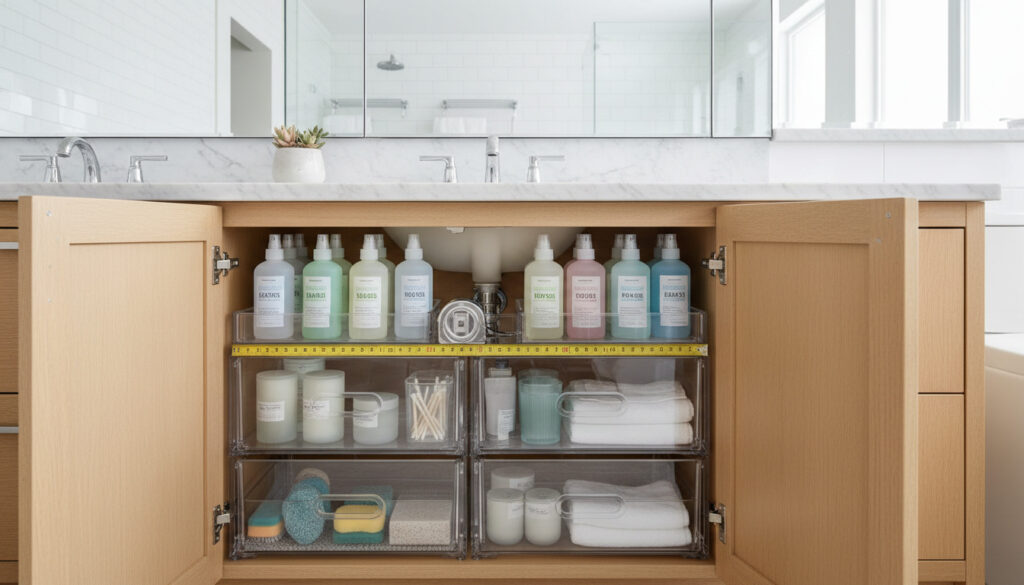
Under Sink Bathroom Cabinet – Organizers, Dimensions and Tips
Under sink bathroom cabinets represent one of the most challenging storage environments in residential spaces. The confined cavity beneath the basin, obstructed by plumbing fixtures and prone to moisture accumulation, frequently becomes a disorganized repository for cleaning supplies and personal care items.
Manufacturers have responded with specialized solutions designed to navigate these architectural constraints. Adjustable two-tier pull-outs, expandable wire frames, and modular drawer systems now accommodate U-traps and P-traps while maximizing vertical space in areas typically ranging from 9 to 12 inches wide and 14 to 22 inches deep.
This examination covers standardized dimensions, material specifications resistant to humid conditions, and installation methodologies that require minimal tools. The analysis addresses specific requirements for compact bathrooms and evaluates current product categories available through major retailers.
How to Organize an Under Sink Bathroom Cabinet
20-24″ W x 18-20″ D x 30-36″ H
Adjustable shelves, pull-out mechanisms, waterproof construction
Drainage pipe clearance, humidity exposure, irregular depths
Chrome-plated steel, powder-coated metal, sealed hardwood
- Pipe clearance of 6-8 inches must be reserved before selecting any organizer
- Two-tier systems can increase usable storage capacity by approximately 50 percent
- Waterproof coatings and ventilated panels prevent corrosion in humid environments
- Pull-out designs eliminate the need to reach into deep cabinet recesses
- Expandable units accommodate irregular widths between 16 and 32.5 inches
- Chrome-plated steel offers superior rust resistance compared to untreated metals
- Most modern installations require no specialized tools beyond measuring equipment
| Specification | Measurement Range |
|---|---|
| Average Organizer Width | 9-12 inches |
| Standard Depth Range | 14-22 inches |
| Typical Height | 12-20 inches |
| Pipe Clearance Required | 6-8 inches |
| Weight Capacity per Shelf | 20-50 lbs |
| Optimal Fit Dimensions | 12-18″ W x 10-15″ D x 12-20″ H |
| Compact Size Option | 5-9.75″ W x 7.87-14.5″ D |
| Medium Size Range | 10.7-12″ W x 14-21″ D |
| Wide Configuration | 11.5-29″ W x 17.8-21.75″ D |
| Expandable Length Range | Up to 32.5-53 inches |
Standard Dimensions and Installation for Under Sink Bathroom Cabinets
Precise measurement determines functional compatibility. According to specifications from Woodworker Express, optimal under-sink organizers measure between 12-18 inches wide, 10-15 inches deep, and 12-20 inches high to accommodate plumbing traps while maximizing storage.
Measuring for Pipe Clearance
The presence of U-traps and P-traps necessitates specific spatial allowances. Compact units measuring 5-9.75 inches wide suit narrow vanities, while medium configurations of 10.7-12 inches accommodate standard residential installations. Wide options extending to 29 inches serve double-basin setups. All measurements must account for the 6-8 inch clearance required around drainage pipes.
Installation Procedures
Most contemporary systems require no tools for assembly. Lowe’s installation guidelines indicate the process involves clearing the cabinet, adding protective vinyl liners if desired, and sliding units into position around existing plumbing. A demonstration from YouTube illustrates how Trinity organizers fit within 1990s-era low vanities by attaching templates and aligning baskets with careful attention to top clearance.
Create cardboard templates matching prospective organizer dimensions. Test these around exposed pipes before purchase to verify pull-out mechanisms operate without obstruction. Adjustable units spanning 16-32.5 inches accommodate irregular cabinet geometries.
Best Under Sink Organizers and Products for Bathrooms
Current market offerings fall into three primary categories based on structural design and mounting methodology. Each configuration addresses specific spatial constraints and usage patterns.
Two-Tier Pull-Out Systems
These units, typically manufactured from chrome-plated steel or powder-coated metal with rust-resistant PE coatings, feature sliding baskets that extend fully for rear access. Walmart lists compact versions at 9.44 inches wide, while Lowe’s carries medium-duty models from LOVMOR measuring 11.5 inches wide with 21.5-inch depth capacity. Heights range from 13.4 to 17 inches to clear standard traps.
Sliding Drawer Configurations
Characterized by enclosed platforms rather than wire baskets, these systems suit users storing smaller items prone to tipping. Home Depot offers units at 12 inches wide by 16.5 inches deep with heights reaching 17 inches. Wayfair provides alternatives in the 10.7-12 inch width range with depths extending to 21 inches.
Freestanding and Expandable Options
For irregular spaces, expandable shelves adjust horizontally to fit gaps between 16 and 32.5 inches. The Container Store stocks units featuring natural wood surfaces with metal frames, adjustable between 7.87 and 11.8 inches in width. These configurations utilize ventilated panels and drip trays—specifically Flex Polymer models at 34.5 inches wide—to manage spills and humidity.
Cleaning and Maintaining Under Sink Bathroom Cabinets
Maintenance protocols vary by material composition but share common principles of moisture management and corrosion prevention. Regular attention extends functional lifespan and prevents mold accumulation in enclosed bathroom environments.
Wipe surfaces monthly using a damp cloth. Ventilated designs allow natural drainage of minor spills, while corrosion-resistant coatings minimize degradation from constant humidity. Pull mechanisms should be exercised regularly to prevent sticking.
Wooden components require specific care protocols. Harsh chemical cleaners compromise sealants and promote warping. Instead, mild soap solutions preserve protective finishes. Metal frameworks benefit from occasional drying to prevent water spot accumulation on chrome surfaces.
Fully extend pull-out mechanisms during cleaning cycles to access rear cabinet areas where mold proliferation typically initiates. This practice doubles effective storage accessibility without requiring disassembly of the organizational system.
Established Facts and Remaining Uncertainties
While industry standards provide clear guidance for typical installations, certain variables require individual assessment before purchase.
| Verified Specifications | Unresolved Variables |
|---|---|
| Standard vanities accommodate organizers measuring 12-18 inches wide with 6-8 inch pipe clearance | Exact compatibility with pre-1990s plumbing configurations and non-standard trap geometries |
| Chrome-plated steel and powder-coated metals demonstrate measurable corrosion resistance in humid environments | Long-term degradation rates of rust-resistant coatings under continuous moisture exposure |
| Most residential units support 20-50 lbs per shelf according to manufacturer specifications | Universal weight distribution standards across floor-mounted versus door-mounted systems |
| Pull-out 2-tier systems consistently receive 4.0-4.7 star ratings for stability and ease of installation | Comparative environmental impact analyses of disposable plastic versus permanent metal installations |
Under Sink Bathroom Cabinet Essentials and Trends
Current storage optimization research indicates that approximately 70 percent of residential bathrooms underutilize available under-sink volume. This inefficiency drives innovation toward modular, adjustable systems capable of adapting to diverse vanity geometries without structural modification. Zone 2 Heart Rate Guide provides parallel insights into optimizing physical spaces for efficiency.
Emerging product patterns emphasize pull-out 2-tier wire baskets with integrated wood handles, dominating market share for small bathroom applications. Soft-close mechanisms and heavy-duty chrome configurations measuring 12 inches wide by 21 inches deep represent growth categories. Manufacturers increasingly prioritize eco-coated steel and high-capacity designs adjustable to 15.9-inch depths, reflecting consumer demand for sustainable, efficient storage.
The convergence of waterproof engineering—including drip trays and ventilated panels—with tool-free installation protocols suggests continued market expansion in the rental and DIY sectors. These developments address the persistent challenge of organizing confined spaces while accommodating mandatory plumbing infrastructure.
Industry Sources and Technical Perspectives
Best fits for under-sink spaces are 12-18 inches W x 10-15 inches D x 12-20 inches H, accommodating U- or P-traps while expanding around pipes.
— Woodworker Express Technical Specifications
Most under-sink organizers now require no tools for installation, utilizing hook-and-bracket systems that accommodate existing plumbing without modification.
— Lowe’s Installation Guidelines
Waterproof traits including ventilated panels for airflow and easy spill cleanup, alongside corrosion-resistant coatings, prove essential for humid bathroom environments.
— Home Depot Product Specifications
Practical Implementation Summary
Effective under-sink bathroom cabinet organization requires precise measurement of available width, depth, and pipe clearance, followed by selection of appropriate materials—specifically chrome-plated steel or powder-coated metal with corrosion resistance. Two-tier pull-out systems maximize accessibility in spaces typically constrained to 12-18 inch widths, while expandable units accommodate irregular dimensions. Proper maintenance involves regular wiping of ventilated surfaces and avoidance of harsh chemicals on wooden components. Turmeric and Black Pepper Benefits offers additional insights into organizing kitchen spaces with similar constraints.
Frequently Asked Questions
What weight limits apply to under sink organizers?
Most units support 20-50 pounds per shelf, though specific capacity varies by mounting system and material gauge. Freestanding floor units typically tolerate higher loads than door-mounted alternatives.
Can these organizers accommodate pedestal sinks?
Standard under-sink organizers require cabinet enclosures for support. Pedestal sinks lack interior cabinetry, necessitating wall-mounted or freestanding storage solutions positioned adjacent to the basin instead.
How do I prevent mold growth under the sink?
Select ventilated designs that promote airflow, wipe spills immediately, and fully extend pull-out mechanisms monthly to clean rear cabinet surfaces where moisture accumulates.
Are rental-friendly installation options available?
Most contemporary organizers require no tools or permanent mounting, utilizing hook-and-bracket systems that slide into place without drilling or cabinet modification.
What distinguishes chrome-plated from powder-coated finishes?
Chrome-plating provides superior rust resistance through electrolytic deposition, while powder-coating applies a rust-resistant PE layer via electrostatic spray. Both suit humid environments, though chrome typically offers brighter reflectivity.
How frequently should organizers be replaced?
With proper maintenance including prompt spill cleanup and humidity control, quality metal organizers function indefinitely. Replace units only when sliding mechanisms fail or coating degradation becomes visible.
Can I store cleaning chemicals in these units?
Yes, provided the organizer features waterproof materials and ventilated construction. Drip trays offer additional protection against corrosive spills damaging cabinet floors.
More related posts
 Football Scores Today Live Scores – Best Sites & Apps
 Advent Calendar 2025 Guide: History, Rules & Best Buys
 Enneagram Test: Which Is Most Accurate & Actually Free? (9 Types)
 How to Fix Sound Not Working on Windows PC or Laptop
 Diana Rigg: Cause of Death, Illness, Net Worth, and Legacy
 Worzel Gummidge Catchphrase, Accent, Meaning and TV Guide
 Liz Earle: Marriages, Children, and Net Worth
 You Me At Six – From Pop-Punk to Final Tour in 2025