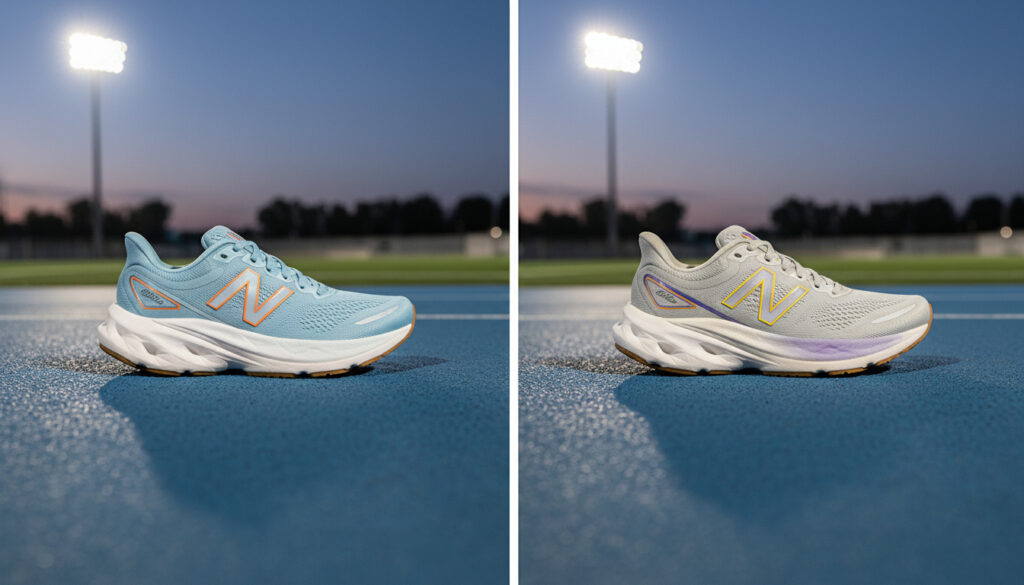
New Balance 1080 v14 – Firmer, More Stable Vs v13
The New Balance Fresh Foam X 1080 v14 represents a decisive pivot in the evolution of premium daily trainers. Released to testing groups in September 2024, this iteration abandons the ultra-plush philosophy that defined its predecessor, instead pursuing structural integrity and responsive stability. Runners familiar with the 1080 series will encounter a firmer underfoot experience, increased stack height, and geometric modifications designed for faster paces and longer distances.
Laboratory testing reveals substantial dimensional changes between the fourteenth and thirteenth generations. The v14 carries approximately 0.9 to 1.3 additional ounces, directing that mass into raised midsole sidewalls and a wider base platform. These alterations address specific criticism levied against the v13 regarding excessive softness and instability during footstrike transitions.
Multiple expert reviewers note the v14’s shift from a rebound-centric foam toward an impact-dissipation system. Energy spreads laterally through the midsole rather than returning vertically, creating a planted sensation that favors controlled efforts over energetic bouncing. This characteristic fundamentally separates the v14 from its lineage, positioning it as a structured workhorse rather than a pillowy cruiser.
New Balance 1080 v14 vs v13: Key Differences
37.0 mm (v14) vs 34.1 mm (v13)
285g (v14) vs 264g (v13)
Significantly improved (v14)
Firmer, less bouncy (v14)
- v14 employs a firmer Fresh Foam X compound with 28.5 AC rating compared to the softer baseline of v13 source
- Structural redesign includes raised midsole sidewalls and wider base geometry for enhanced torsional rigidity source
- Weight increases by approximately 0.9-1.3 ounces depending on size due to stability-focused reinforcements source
- Torsional rigidity improves to 4/5 rating from the lower baseline of the previous model
- Upper construction shifts to lighter engineered mesh for improved temperature regulation source
- Energy dissipation characteristics change from rebound-focused to shock-spreading, reducing bounciness source
| Feature | v14 Specification | v13 Baseline |
|---|---|---|
| Weight | 10.1-10.5 oz (285g) | 9.2-9.3 oz (260-264g) |
| Heel Stack Height | 37.0 mm | 34.1 mm |
| Forefoot Stack | ~32 mm | ~32 mm |
| Heel Drop | 6 mm | 6 mm |
| Midsole Softness | 28.5 AC (firmer) | Softer |
| Torsional Rigidity | 4/5 | Lower |
| Heel Shock Absorption | 142 SA | Lower |
| Forefoot Shock Absorption | 128 SA | Lower |
| Toebox Design | Narrow, tapered | Standard |
| Upper Material | Engineered mesh | Knitted, thicker |
| Outsole Rubber | Thicker forefoot pieces | Standard |
Reviewers consistently describe the v13 as overly soft and lacking structure, making it feel unstable for runners requiring medial support. Conversely, the v14’s wider base creates a planted sensation during footstrikes, while the stiffer forefoot and prominent rocker geometry provide energy-saving properties absent in the previous iteration source.
What Are the Specs of New Balance 1080 v14?
Weight and Dimensional Changes
Men’s sizing registers between 10.1 and 10.5 ounces depending on specific configuration, representing a significant increase from the 9.2-9.3 ounce range of the v13. This mass redistribution prioritizes stability over the nimble agility characteristic of the earlier model. The dimensional expansion concentrates in the heel stack, which elevates to 37.0 millimeters while maintaining the 6-millimeter drop consistent across both generations.
Midsole Engineering and Cushioning Profile
The Fresh Foam X compound returns with modified density characteristics. Laboratory measurements indicate a 28.5 AC softness rating, notably firmer than the v13 baseline. Despite this increased density, the midsole retains the plush sensation associated with the 1080 lineage, though with altered energy return properties. Shock absorption ratings reach 142 SA in the heel and 128 SA in the forefoot, suggesting enhanced impact protection for high-mileage training.
The additional 2.9mm of heel stack specifically benefits heel strikers during long-distance efforts, though the shoe dissipates impact energy laterally rather than returning it vertically, resulting in reduced bounce compared to cushioned competitors.
Upper Construction and Breathability
Engineered mesh replaces the knitted material of the v13, theoretically improving thermal regulation during warm-weather training. However, field testing reveals contradictory results; despite the lighter material specifications, some reviewers report the v14 remains fairly warm during extended efforts. The upper construction hugs the midfoot more aggressively than previous iterations, with reduced flex zones in the toebox creating a more restrictive fit source.
Is the New Balance 1080 v14 Worth Buying?
Performance Versatility
Version 14 demonstrates superior versatility across pace ranges compared to its predecessor. The structural improvements allow the shoe to handle tempo efforts and faster paces that destabilized the v13. Long-run performance benefits from the increased stack height and shock absorption ratings, particularly for runners logging high weekly mileage. The v13 retains superiority exclusively for relaxed recovery jogging where maximum softness outweighs stability requirements.
Durability Assessment
Reviewers characterize the v14’s durability as exceptional, citing the premium upper construction and thicker rubber pieces positioned strategically across the forefoot outsole. These reinforcements address wear patterns observed in the v13, suggesting extended service life for daily training rotation. The material upgrades appear designed specifically to withstand the rigors of high-mileage training blocks.
Comparison with Market Alternatives
Within the maximalist cushioned trainer category, the Hoka Skyflow and Adidas Supernova Prima emerge as comparable alternatives offering similar stack heights. The v14 distinguishes itself through its stability-focused geometry rather than pure plushness, occupying a unique position between soft recovery shoes and firm performance trainers.
The v14 excels during Zone 2 Heart Rate Guide training and tempo sessions, whereas the v13 remains preferable for recovery jogging where maximum softness outweighs stability requirements.
New Balance 1080 v14 Sizing and Fit Guide
Toebox Constraints and Width Options
The v14 introduces a notably narrow toebox with tapered geometry that restricts forefoot splay. This design choice creates particular challenges for runners with wider metatarsal structures or those using the shoe for walking, where the restrictive front section proves less comfortable than the v13’s more forgiving shape. Both versions maintain the comfortable upper construction associated with the 1080 line, though the v14’s fit characteristics demand more careful selection.
Practical Sizing Recommendations
Most runners require sizing adjustments for optimal comfort. The narrow toebox necessitates either selecting a half size larger than standard measurement or explicitly choosing the wide version (2E for men, D for women) available through New Balance’s width program. Runners attempting to use their v13 size directly in the v14 without modification report pressure points across the forefoot during longer efforts.
The tapered toebox construction restricts forefoot splay during walking and requires most runners to select a half size larger than their standard measurement or opt for the explicitly labeled wide version.
When Was New Balance 1080 v14 Released?
- Predecessor Establishment: The v13 maintained market presence throughout 2023 following its commercial release.
- Testing Phase: Independent reviewers at Doctors of Running obtained testing samples and published detailed analysis in September 2024 source.
- Commercial Availability: Widespread retail distribution established during late 2024 and early 2025, though specific regional launch dates remain undocumented in available materials.
What Information Remains Uncertain About the 1080 v14?
| Established Facts | Information Gaps |
|---|---|
| Tested September 2024 by multiple outlets | Official manufacturer retail pricing for 2024-2025 |
| Weight: 10.1-10.5 oz (285g) | Specific regional release date variations |
| Stack height: 37mm heel, 32mm forefoot | v15 development timeline or feature planning |
| Material: Engineered mesh upper, Fresh Foam X midsole | Long-term durability testing beyond initial review periods |
| Stability rating: 4/5 torsional rigidity | Podiatric professional consensus on injury prevention |
How Does the 1080 v14 Position Itself in the Daily Trainer Market?
The 1080 v14 occupies a distinct niche within the crowded daily trainer segment. Unlike pure recovery shoes that prioritize cloud-like softness, or tempo trainers built for explosive toe-offs, the v14 functions as a structured mileage eater. Its weight and stack height place it firmly in the maximalist category, yet the firmer foam density and stability features suggest targeting runners who require support during aerobic base building rather than those seeking pillowy comfort.
This positioning creates direct competition with structured trainers like the Hoka Skyflow, though the v14’s Fresh Foam X implementation provides a distinct underfoot feel compared to EVA-based alternatives. The shoe effectively serves high-mileage athletes training for half and full marathons who require protection without the instability of overly soft platforms.
What Do Expert Reviews Conclude About the 1080 v14?
“The v14 is notably firmer and more stable than the v13, addressing the previous model’s softness issues while maintaining the plush feel both versions are known for.”
— Flawless Shoe Reviews
“The wider base makes foot strikes feel more planted, and version 14 has more versatility and can handle faster paces better than v13.”
— Running Shoes Guru
“The v14 impressed reviewers with exceptional durability and premium upper construction, featuring thicker rubber pieces on its forefoot compared to the v13.”
— RunRepeat
Is the New Balance 1080 v14 the Right Shoe for Your Training?
Runners prioritizing firm, stable platforms for long runs and faster daily training will find the v14 represents a significant upgrade over its predecessor. Those who preferred the v13 specifically for its pillowy softness and nimble lightness may need to seek alternatives or retain the older model for recovery days. The narrow toebox demands careful sizing attention, potentially requiring wide versions or half-size adjustments. For athletes building high-mileage bases who found the v13 too unstable, the structural improvements justify the weight penalty. Those seeking current gear savings might explore available North Face Discount Codes for complementary training apparel.
Frequently Asked Questions
When was New Balance 1080 v14 released?
Testing samples appeared with reviewers in September 2024, with commercial availability following in late 2024 and early 2025.
What is the price of New Balance 1080 v14?
Specific 2024-2025 retail pricing remains unconfirmed in available documentation, though the shoe positioned as a premium daily trainer typically commands standard flagship pricing.
Is the New Balance 1080 v14 better than the v13?
The v14 offers superior stability and versatility for faster paces and long runs, while the v13 remains preferable for recovery jogging and runners seeking maximum softness.
Does the New Balance 1080 v14 fit wide feet?
The standard width features a narrow, tapered toebox that requires most runners to size up or select the explicitly labeled wide version for comfortable fit.
What are the best alternatives to New Balance 1080 v14?
The Hoka Skyflow and Adidas Supernova Prima offer comparable cushioning levels for runners seeking different stability characteristics or fit geometries.
What is the weight of New Balance 1080 v14?
Men’s sizing weighs approximately 10.1 to 10.5 ounces (285g), representing roughly 0.9 to 1.3 ounces heavier than the v13.
What is the stack height and drop of the 1080 v14?
The heel stack measures 37.0mm with approximately 32mm in the forefoot, maintaining the 6mm drop consistent with the previous version.
More related posts
 Print on Demand UK: Best Companies, Costs & Profit Guide
 GCSE Results Day 2025: Date, Grades, Appeals & Next Steps
 Jeffrey Dahmer: Verified Facts, Official Sources, Key Questions
 Sergio Ramos in 2026: Free Agent, Spain Exit, Messi Friendship
 Jack O’Connell Movies and TV Shows – Complete Filmography and Rankings
 School of Rock Cast: Kids, Zack, Principal & Where They Are Now
 Swollen Glands in Neck – Causes, Symptoms & Treatment
 Erin Kellyman: Age, Height, Ethnicity, Roles & More